

High-Current Anti-Spark Connector: Copper Alloy Substrate vs Gold-Plated Conductivity Test Results
2026-07-22 11:41:54
Click:
“
High-Current Anti-Spark Connector: Copper Alloy Substrate vs Gold-Plated Conduct
”
High-Current Anti-Spark Connector: Copper Alloy Substrate vs Gold-Plated Conductivity Test Results
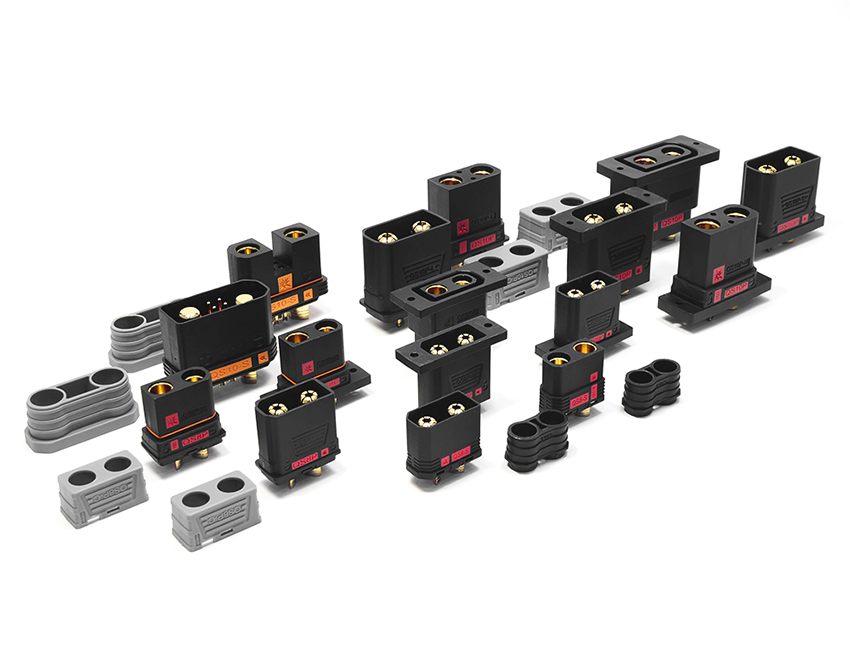
High current transmission (50A-400A) demands exceptional conductivity to avoid overheating and arcing—connector substrate and plating materials are critical. This article shares real-world conductivity tests between copper alloy substrate and gold-plated QS Antispark connectors, providing data for engineer selection.
Why Conductivity Matters for High-Current Connectors
Poor conductivity increases contact resistance, leading to excessive temperature rise (over 85℃ per UL standards) and arcing during plugging/unplugging. This shortens connector lifespan, damages terminals, and risks thermal runaway in energy storage/battery systems. For high-current anti-spark connectors, low contact resistance and stable conductivity are non-negotiable.
Test Overview (QS Antispark Connector)
Youwei Technology tested two QS Antispark connector variants (50A, 300A models) under 25℃, 50% humidity:
- Group A: Copper alloy substrate (tinned surface)
- Group B: Copper alloy substrate (gold-plated surface, 5μm plating thickness) Test metrics: Contact resistance, temperature rise under rated current, and conductivity stability after 200 plug cycles.
Test Results & Analysis
- Contact resistance: Group A (tinned copper alloy) has a contact resistance of 8-12mΩ; Group B (gold-plated) has 2-4mΩ—66% lower than Group A. Gold’s inertness eliminates oxidation, maintaining low resistance.
- Temperature rise: At rated current (300A), Group A hits 72℃; Group B only reaches 41℃—43% lower than Group A. Lower resistance reduces heat generation, critical for long-term safety.
- Conductivity stability (200 plug cycles): Group A’s resistance rises to 18mΩ (oxidation/wear); Group B’s resistance remains at 3-5mΩ (gold plating resists wear/oxidation). Gold plating preserves conductivity through repeated use.
Conclusion
Gold-plated QS Antispark connectors deliver superior conductivity, lower temperature rise, and long-term stability—ideal for high-current, frequent-plug applications (AGVs, battery swap cabinets). Copper alloy (tinned) works for low-frequency, low-current scenarios (cost-effective). Youwei Technology customizes plating thickness (3-10μm) for specific projects.If you have any request please contact with my tech team http://www.youweic.com
Author:
YOUWEI TECHNOLOGIES(DONGGUAN) CO.LTD









Premium Cable Solutions
High-quality cables designed for superior performance and reliability across all your connectivity needs

Copyright © 2002-2026 YOUWEI TECHNOLOGIES(DONGGUAN) Ltd. All Rights Reserved.
Copyright © 2005-2015 YOUWEI TECHNOLOGIES(DONGGUAN) Ltd. All Rights Reserved.